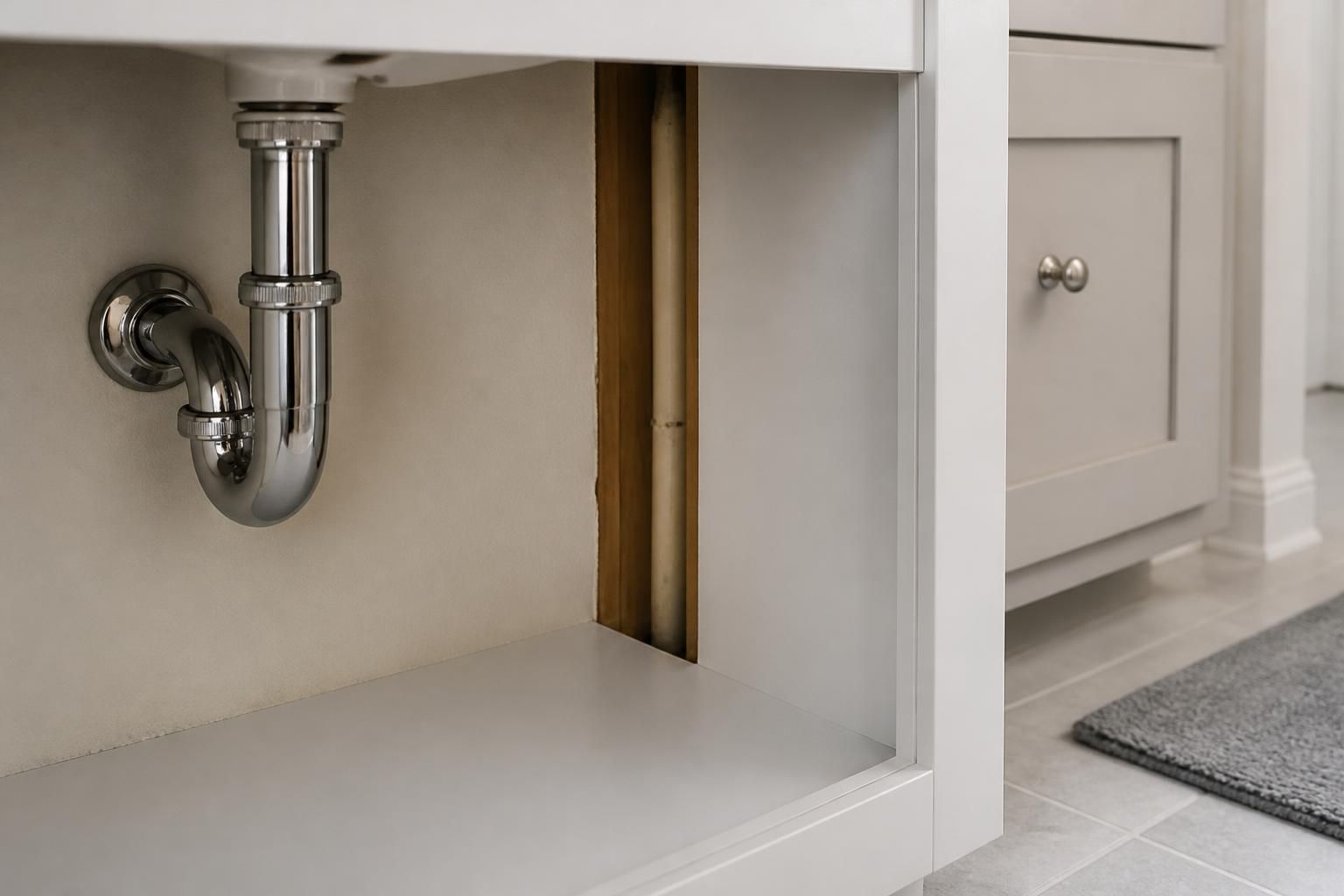
A damp cabinet, a rising water bill, or a spot on the ceiling can point to a leak you cannot see. Some leaks stay quiet for days or weeks before the damage becomes obvious, and by then the repair can be more involved than it should have been.
If you notice musty smells, soft flooring, or water stains, Bramble Plumbing can help track down the source. We look for the cause, explain what we find, and give you a clear written quote so you know the next step.
Hidden leaks do not always show up as standing water. Often, the first clue is a change you would not expect around the house.
One symptom alone may not confirm a leak, but several together usually mean it is time to take a closer look. Bramble Plumbing helps homeowners across Columbus, OH sort out whether the problem is behind a wall, under a fixture, or tied to a drain or supply line.
Many leaks stay out of sight because they begin in places people do not check every day. A small drip can run along framing, soak insulation, or collect under a floor before it becomes visible.
Some of the most frequent leak locations include cabinet supply lines, toilet connections, bathtub surrounds, water heater hookups, and sections of pipe inside walls or under sinks. A sewer line issue can also show up as wet soil, slow drains, or odors near the line path.
The wet area you see is not always the place where the leak started. Water can travel before it appears, which is why a careful search matters. A ceiling stain below a bathroom may trace back to a loose fitting, not the center of the stain itself. Finding the source early helps avoid patching the wrong area.
When you call Bramble Plumbing for leak detection in Columbus, OH, we start by listening to what you noticed and when it changed. That first conversation helps us narrow the search and focus on the areas most likely to be involved.
We start with your observations, then inspect the visible problem areas for moisture, staining, and active dripping.
We follow signs of water movement, check nearby fixtures and connections, and look for clues that point to the true origin.
Once we identify the issue, we explain what is happening and what repair or next step makes sense.
You get a clear written quote before work moves forward, so there are no surprises when it is time to decide.
This process is built for homeowners who want straightforward answers, not guesswork. We keep the visit focused on finding the leak and giving you a practical path forward.
Leaks can come from indoor fixtures, but they can also show up outside or below grade. Knowing the difference helps narrow the problem faster.
Under-sink connections, toilets, tubs, showers, water heaters, and exposed supply lines are common starting points. Indoor leaks often leave visible clues such as peeling paint, warped trim, or water pooling near a fixture.
Outdoor leaks may appear as unusually damp ground, a weak spot near an exterior line, or wet areas that do not match recent weather or use. If a sewer line is involved, you may notice drain trouble along with the moisture problem.
Before a visit, it helps to note where the problem appears, whether it changes after water use, and if any fixtures seem noisy or slow. That information can shorten the search and point us toward the right area first.
A small leak can keep getting worse each time the fixture is used. Even when the drip seems minor, the surrounding materials may be taking on water every day.
Taking action early can help limit damage to drywall, flooring, cabinets, and trim. It can also reduce the chance that a hidden leak turns into a larger repair. If the problem is linked to a drain, water heater, or sewer line, finding it early can keep the issue from spreading to other parts of the home.
For homeowners in Columbus and nearby areas like Dublin, Westerville, Grove City, Hilliard, and Worthington, quick attention to a leak often means less cleanup and a clearer repair plan.
Leak detection is not one-size-fits-all. We focus on the fixtures and lines most likely to explain the signs you are seeing.
If the leak is tied to a repair we also handle, such as toilet repair, water heater repair, or sewer line repair, we can walk you through those options after the source is found.
You do not need to tear anything apart before we arrive. A few simple notes can make the visit more productive.
Use tape, a sticky note, or a phone photo to show where you first noticed the water or stain.
Tell us when you first saw the sign and whether it changes after showers, laundry, or other water use.
Clear items from under sinks or around the affected fixture so we can inspect the area quickly.
Slow drains, noises, odors, or a water meter change can all help connect the dots.
These small details help us focus the visit and shorten the time spent hunting for the source.
Common first signs include damp spots, water stains, a musty smell, soft flooring, or a fixture that seems to use more water than expected. Sometimes the only clue is the sound of moving water when nothing is on.
Yes. A leak may begin inside a wall cavity and stay hidden until moisture reaches the surface. By the time you see bubbling paint or staining, the source may be a fitting or pipe several inches away.
No. We look for leaks around toilets, tubs, showers, water heaters, and visible supply lines, along with signs that point to hidden water movement inside the home.
Small leaks can still cause damage over time. Even a slow drip may soak nearby materials, weaken finishes, and make a repair more involved later.
Yes. Sewer line problems can create wet ground, odors, and drainage trouble that may seem like a general water leak at first. Looking at the full pattern helps narrow it down.
If you see staining, smell something musty, hear water running unexpectedly, or notice moisture that keeps returning, it is worth having the source checked. Bramble Plumbing can help homeowners in Columbus, OH get a clear answer.
If you need leak detection in Columbus, OH, contact Bramble Plumbing at +16145550142 or hello@brambleplumbing.example. We help homeowners find the source, understand the problem, and move forward with a written quote and a clear plan.

Get Started
Tell us what is happening at your home, and we will help you figure out the next best step. Whether you need a drain cleared, a leak tracked down, or a water heater looked at, we make the process straightforward.